Kevin Hartley, Cambio Coffee Roasters

We visit with Kevin Hartley. He is the Co-Founder and CEO of Cambio Roasters. At Cambio, they are attempting to evolve the coffee pod from a wasteful coffee product into one that is made from recyclable aluminum and compostable coffee and filters.
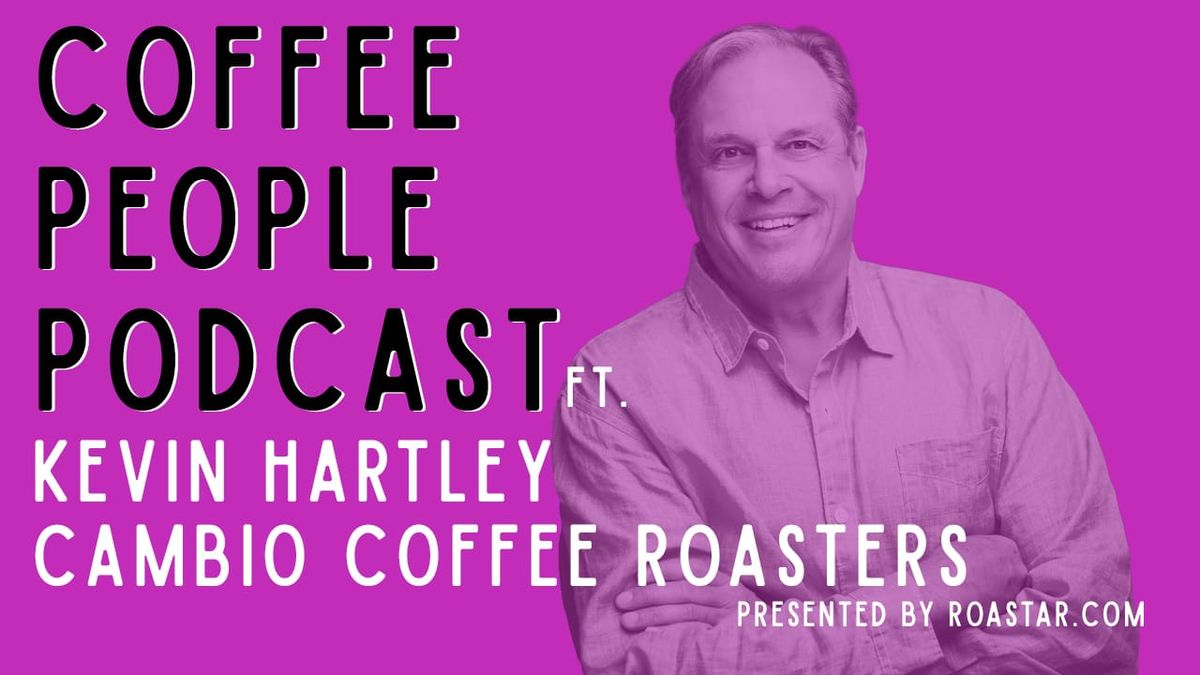
Title image featuring a head shot of Kevin Hartley in black and white against a fuschia background with title text over the image.

Full video posted below, or watch and/or listen to Coffee People on:
Apple Podcasts • YouTube • Spotify • All Your Favorite Platforms!

Role: CEO/Co-Founder of Cambio Roasters
What: Aluminum Coffee Pods
Location: Isle of Palms, South Carolina
Find online:
https://cambioroasters.com/
What they drink: A latte or dark roast black coffee with a lot of half-and-half.

"...I would introduce the concept of maintenance variables and leverage variables. And very simply, in any industry you enter—car wash, restaurant, coffee, lawn chairs, hotels—whatever it is, just because you're a purpose driven brand and have that passion in your heart, there's aspects of whatever industry you're in—they're the maintenance variables—that you have to make sure you're equal to, sort of, the mean competitors in your space, or the business model is never going to work.

So, thing number one is purpose-driven, though; there's a lot of us who care about it; it's not a Band-Aid for the real part of business economics that have to work."
• Kevin Hartley

Editor's note: You may seem some formatting issues on our website. We're going through some backend code updates making our pages easier to share, and working through the details.

What is the coffee pod problem? It depends who you ask (some might argue it isn't a problem at all). Coffee People podcast guest Kevin Hartley, has seen, had, (and probably heard) more perspectives on coffee pods than most of the rest of us combined. As the Chief Innovation Officer for Keurig Green Mountain, Inc (2009-2017), he's part of the reason there are so many Keurigs brewing coffee by the cup on countertops worldwide. He saw the growth, and also the impact.

K-Cups are made from plastic. There are a lot of numbers about how many K-cups are drunk and tossed each year. Many correlate with how many times around the Earth the K-cups sold annually would wrap, laid end to end. 10 1/2 times was one of the larger estimates, but even that was dated. It's a lot of waste. The impact is scary to break down, especially considering many coffee pods are produced with plastic #7, or what I like to call the Whatever plastic. As in, "It's plastic...or whatever." #7 is a catch-all category for all the plastics that don't fit in the 1-6 categories.

Some consumers want the convenience of a coffee pod and want to alleviate the guilt that comes with the associated waste. Perhaps, they also want a better cup of coffee. That's where Kevin sees Cambio Roasters fitting in, providing a recyclable coffee pod alternative that uses coffee whose packaging features buzzy specialty coffee terms, like "sustainably-sourced," "100% organic beans," and "small-batch roasted." He and a team assembled (in part from former Keurig employees) are attempting to offer an equal or better product that is less wasteful than the K-cup without asking customers to sacrifice anything. It's a lofty ambition.

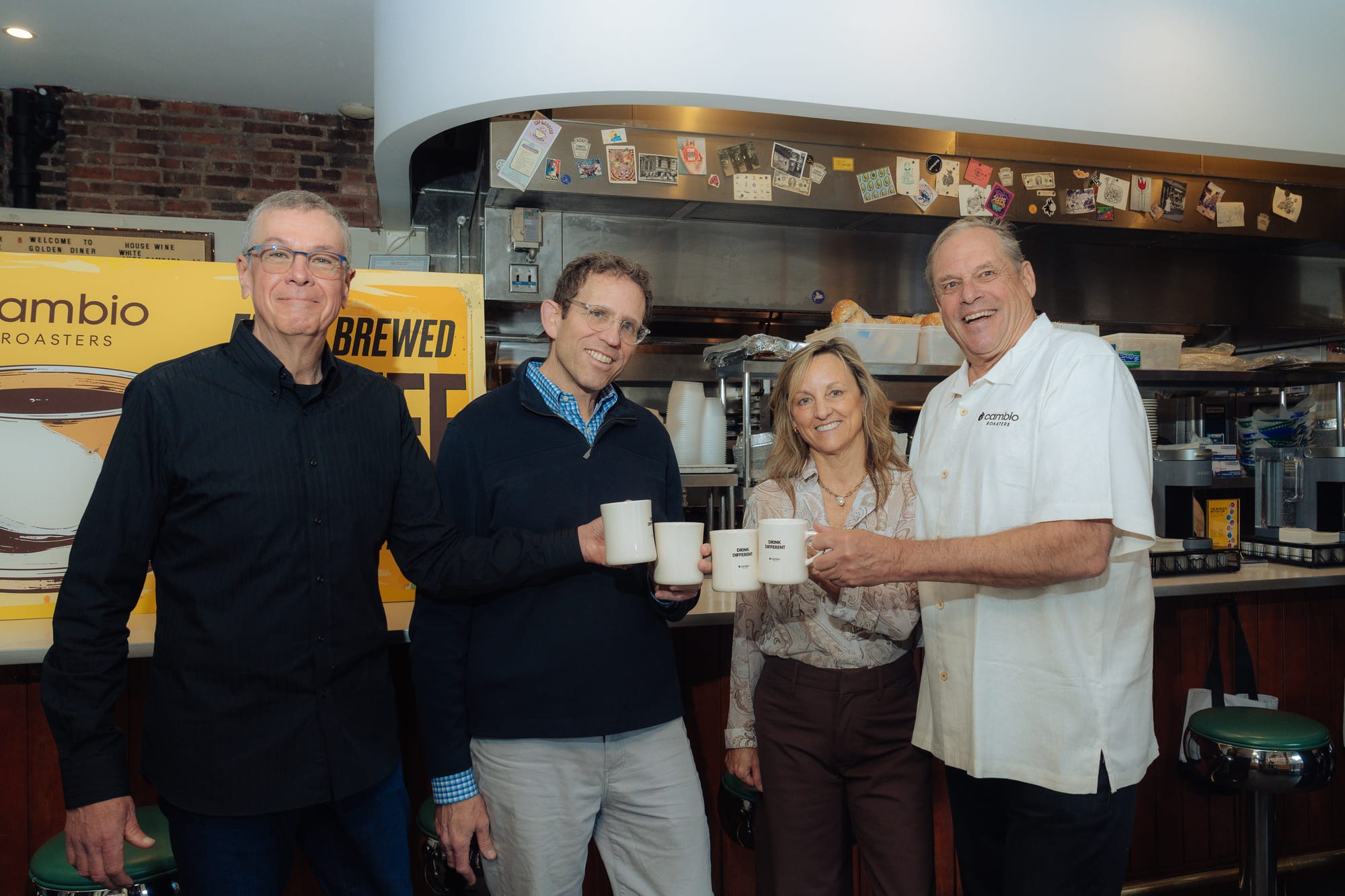
Four people "cheers" their coffee mugs while smiling for the camera. From left: A man in a black button down with short cropped salt-and-pepper hair wearing wire-rim glasses. A bookish looking younger man in a blue sweater over a checked button down. A woman in brown slacks and a light beige buttoned blouse with dusty blonde hair, and a taller man with a big grin, white hair combed over and a white bowling team-style button down with the Cambio Roasters logo featured over the heart. They're standing in front of bar and kitchen in a classic coffee shop diner.
Cambio's leadership team. From Left-to-Right: Mike Cunningham, Dave Sachs, Ann Hutson, Kevin Hartley. Photo provided courtesy of Cambio Roasters. Taken by Hannah Turner-Harts.

The K-cup monster is out of the cage. It's not a matter of how much impact will be created but if Cambio Roasters can siphon enough consumers away to mitigate some of that impact and reduce coffee drinker dependance on plastic.

Will they be successful offering a less wasteful alternative?* Will enough customers care to pay a few extra pennies for an aluminum pod that is made from recyclable material with compostable filters and coffee grounds? How much of an impact will it make? Those are some of the questions driving Kevin in his pursuit of better version of the convenient cup of coffee.

I spent an hour with Kevin trying to make sense of the complexity of the coffee-by-the-cup industry, impact, and even my own emotions about it all. I freely admit to a bias against pod-based coffees and brands. Until recently, I had never actually used a Keurig brewer, though I have had a few experiences with the little Nespresso capsules while traveling.** I also acknowledge that the cat is out of the bag. Coffee pod users aren't going to start brewing with a French press or v60 brewer anytime soon. An option that offers even an incremental improvement towards less impact with each cup will make exponential change.


*Determining if a new product is less wasteful is a landmine field to walk through. The variables for aluminum pods are numerous as this article first published in Grist and then Daily Coffee News portends. The Cambio coffee pod is made of recyclable materials, but is it practically recycled? Are the pods big enough to avoid getting filtered out by the sorting machines? Will customers go through the effort of tearing out the filters and composting the grounds? What impact is placed on manufacturing aluminum? Is it better to encourage a plastic K-Cup user to take one step left toward a recyclable product or to take one bigger step toward a brewer that avoids the single-use cup altogether? There are layers upon layers to consider.

**Cambio Roasters sent me a selection of their coffees and a Keurig brewer to make them on. Look for an upcoming column on the experience. Also, shame on you George Clooney. I don't know what is coming out of those Nespresso capsules, but it barely resembles coffee.

KEY TAKEAWAYS FROM THE POD

  • Barring an extreme circumstance, say hospitalization, Kevin doesn't think he's missed a cup of morning coffee since he was 15.
  • Green Mountain was a local coffee shop before it bought Keurig, setting it on the path to be a monster in the coffee-by-the-cup convenience industry.
  • After several mergers and acquisitions, the company is now Keurig Dr Pepper, Inc. Business has been booming. Approximately, 20 billion K-cups are drunk domestically every year. Company revenues in 2023 almost hit 5 billion dollars (or $5,000,000,000).
  • It is clear to me that Kevin loves the growth period of a business. I venture he needs a bit of the chaos and demand of multitasking to reach fulfillment in the workday!
  • Vermont was a surprising origin for a plastic, disposable coffee pod considering the State's reputation for environmentalism and resident passion for nature. K-cups create a significant amount of plastic waste, and the inventor John Sylvan proffered long ago that he regrets coming up with it (The Atlantic, 2015).

    The idea for a plastic-free pod that led to Cambio Roasters really started at Keurig. Among the team, there was the idea of Let's get this out there as plastic, and develop a plan for how we will we fix it in the future.
  • The K-cup's goal was to solve the "office coffee shop conundrum," i.e. the shared coffee pot. The shape/concept came from Ken's Foods salad dressing cups. Ken's Foods is another New England-based company that has evolved and grown. They started as a local restaurant selling homemade dressings to their customers, and have grown into the third largest purveyor of salad dressing in the United States.
  • Kevin could have retired, but he didn't because he and his team had gotten the bug to see if they could solve the plastic coffee pod problem. The founders are investors, meaning they have skin in the game.
  • The Cambio pods work in Keurig machines intentionally. They aren't replacing Keurig brewers. Those already exist! They are looking to fill a need for the customer looking for something that makes them feel "less icky" about the plastic waste created by a plastic coffee pod, while retaining the convenience of brewing on demand. Internally, that representative customer is named Hope.
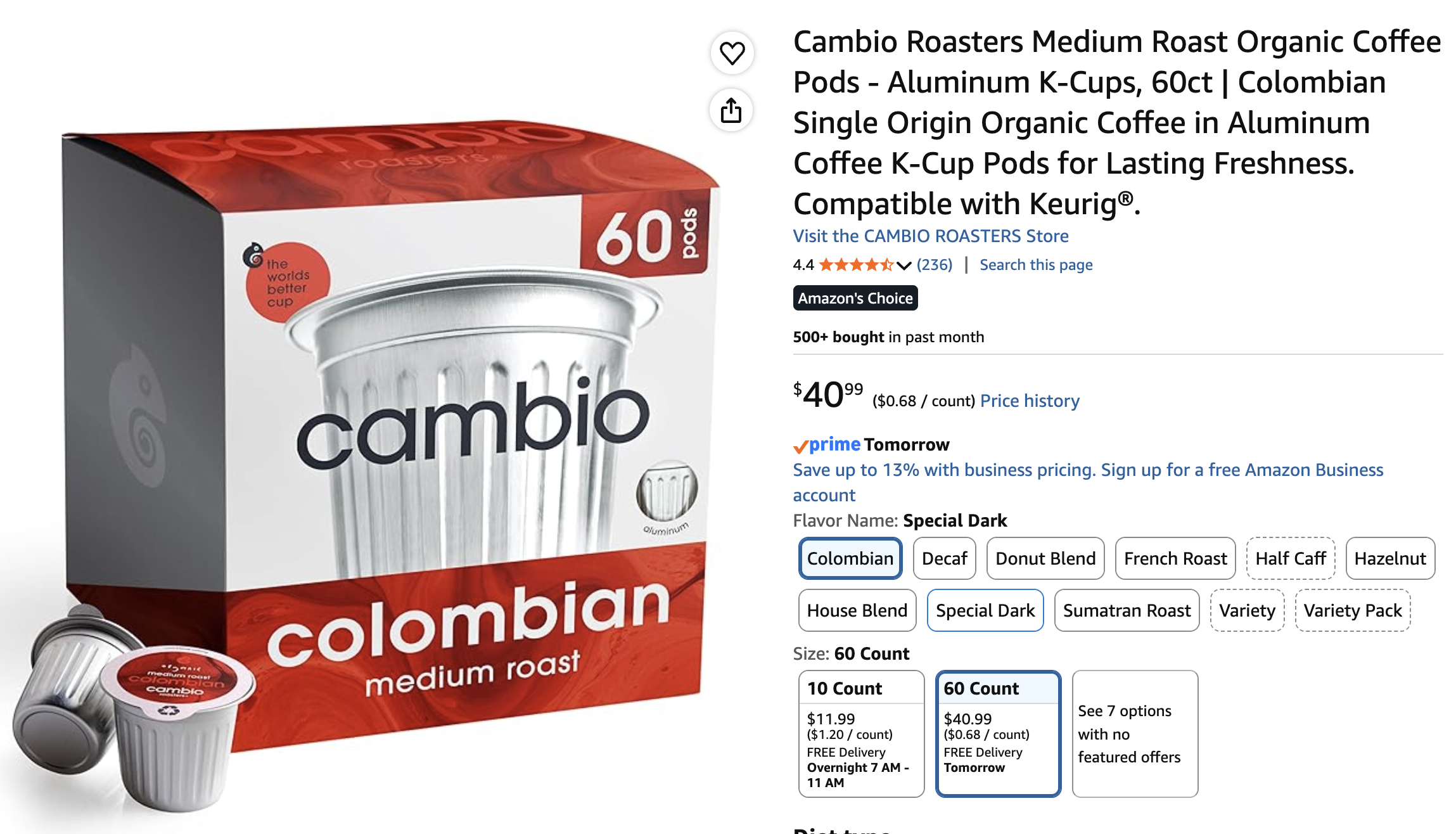
An online shopping post for coffee pods. On the left an image of the box with a red stripe with the coffee details and brand name. On the right, a listing of all the purchase options.
©Cambio Roaster on Amazon.com
  • Per Cambio, the aluminum container aids in keeping oxygen out and flavor in. I don't have data or anecdotal experience to back that up, but it is part of the pitch. According to Kevin, Cambio Roasters is using (more expensive) organic coffees and has a higher price of material per each pod produced compared to their plastic-pod competitors.

    It depends on whom you qualify as a competitor, but the math holds up, for the most part. Today (06/22/2026), a quick search on Amazon shows a 60 pack of Cambio Roasters coffee pods is currently about $41 on Amazon ($0.68 per pod). You can find more and less expensive brands.
    • 60-count box of Dunkin' Donuts pods is $42.10 ($0.70).
    • Green Mountain and Starbucks can get their prices down to about 50-cents per pod (depending on package size).
    • LavAzza's 64-ct Favorite's Collection comes in at $0.66/pod and La Colombe's come in at $0.80/pod.
  • Despite his career success, Kevin still gets a high from the little sales, the ding accompanying a Shopify sale notification offers the reassurance that somewhere out there in the world unknown people are enjoying his coffee and choosing the aluminum pod over a plastic one.
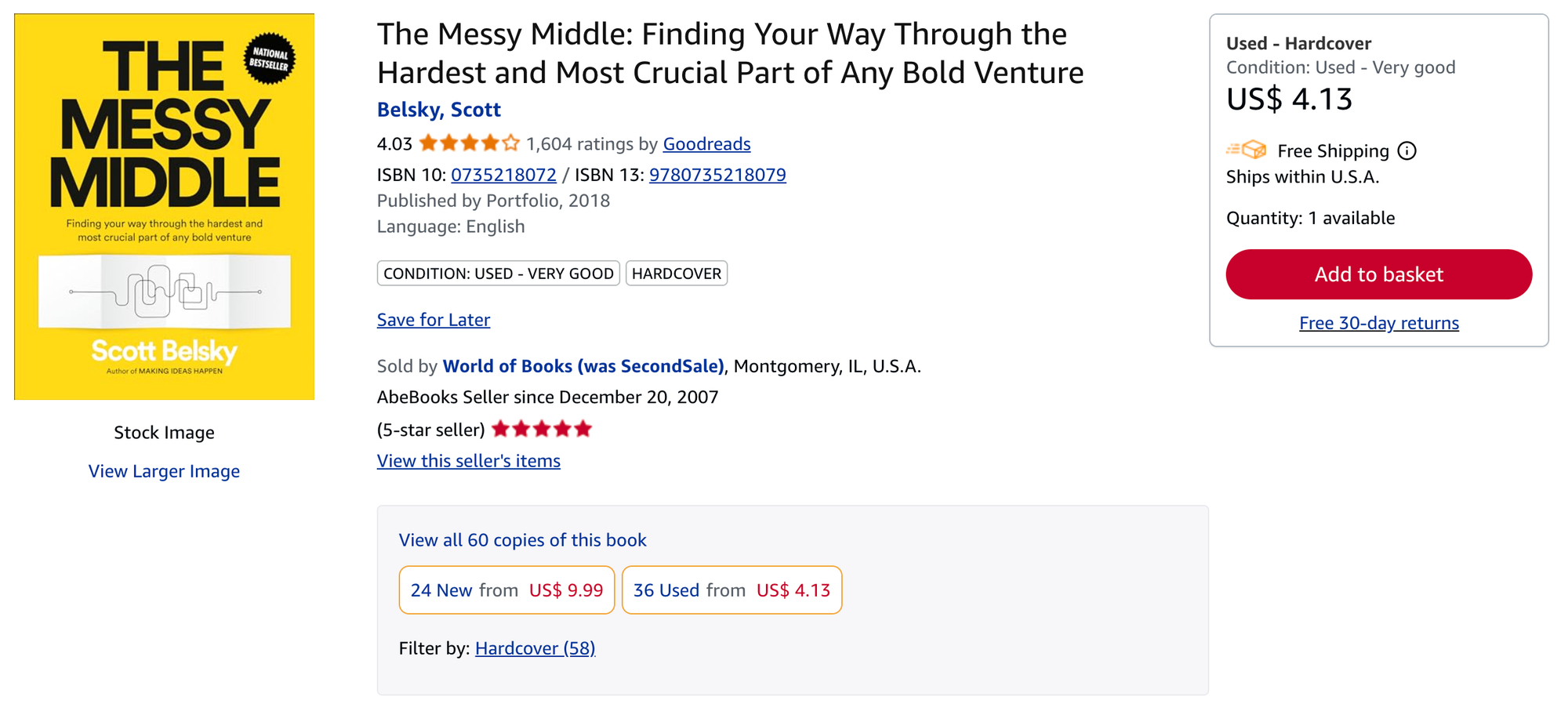
Shopping display for the book The Messy Middle. A copy of the yellow book cover is on the left. An add to basket button in red is on the far right, and book details are in the middle.
You can buy a copy of the book Kevin recommended on AbeBooks.com. AbeBooks is a great resource for used books, but like so many great things, it was bought by Amazon in 2018. It is hard to escape corporate vertical integration. I take solace that at least I'm supporting used bookstores selling on the platform and giving a book a second life.
  • Triple Bottom Line is the capitalist version of trying to make money while doing good. The three pillars of the Triple Bottom Line theory of company success are Profit, People, and Planet. You also see this delineated as: Social, Environmental, and Financial. The qualifiers for achieving success in all three seems to be a moving finishing line. For more of an explanation, watch this short video from the Harvard Business School Online.

COFFEE PEOPLE ARE SEXY...ON ETSY

Speaking of fun! Be sure to check out all of our Coffee People Are Sexy gear in our online Etsy shop.