Coffee Smarter: Sanjeev Mankotia, GaeaStar
Clay Cups Offer a Natural Alternative.
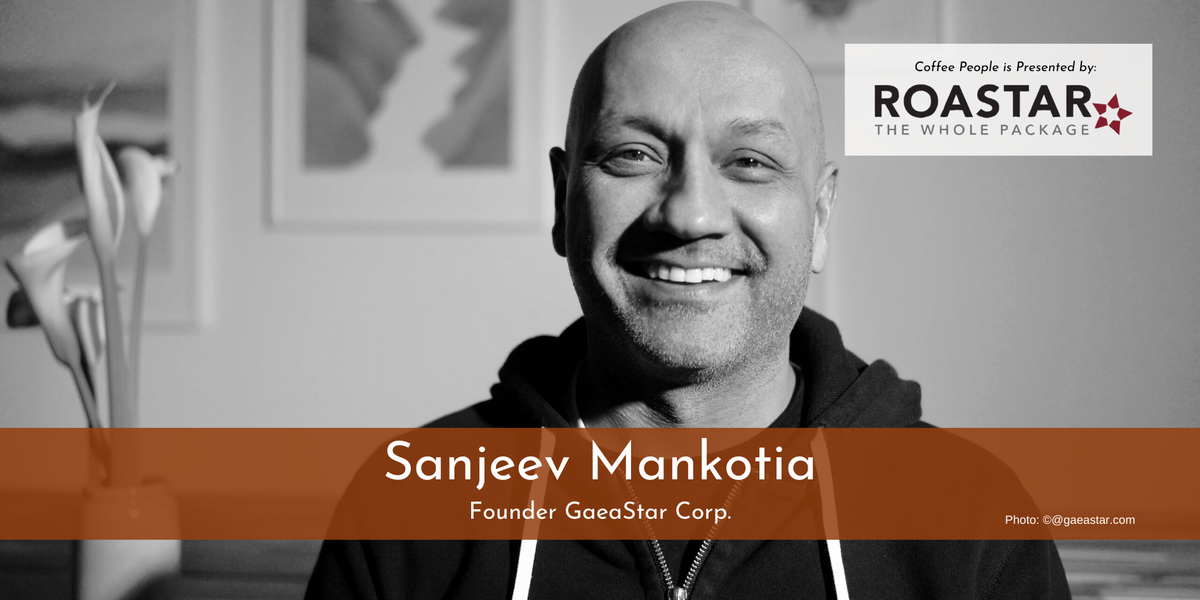
Clay Cups Offer a Natural Alternative.
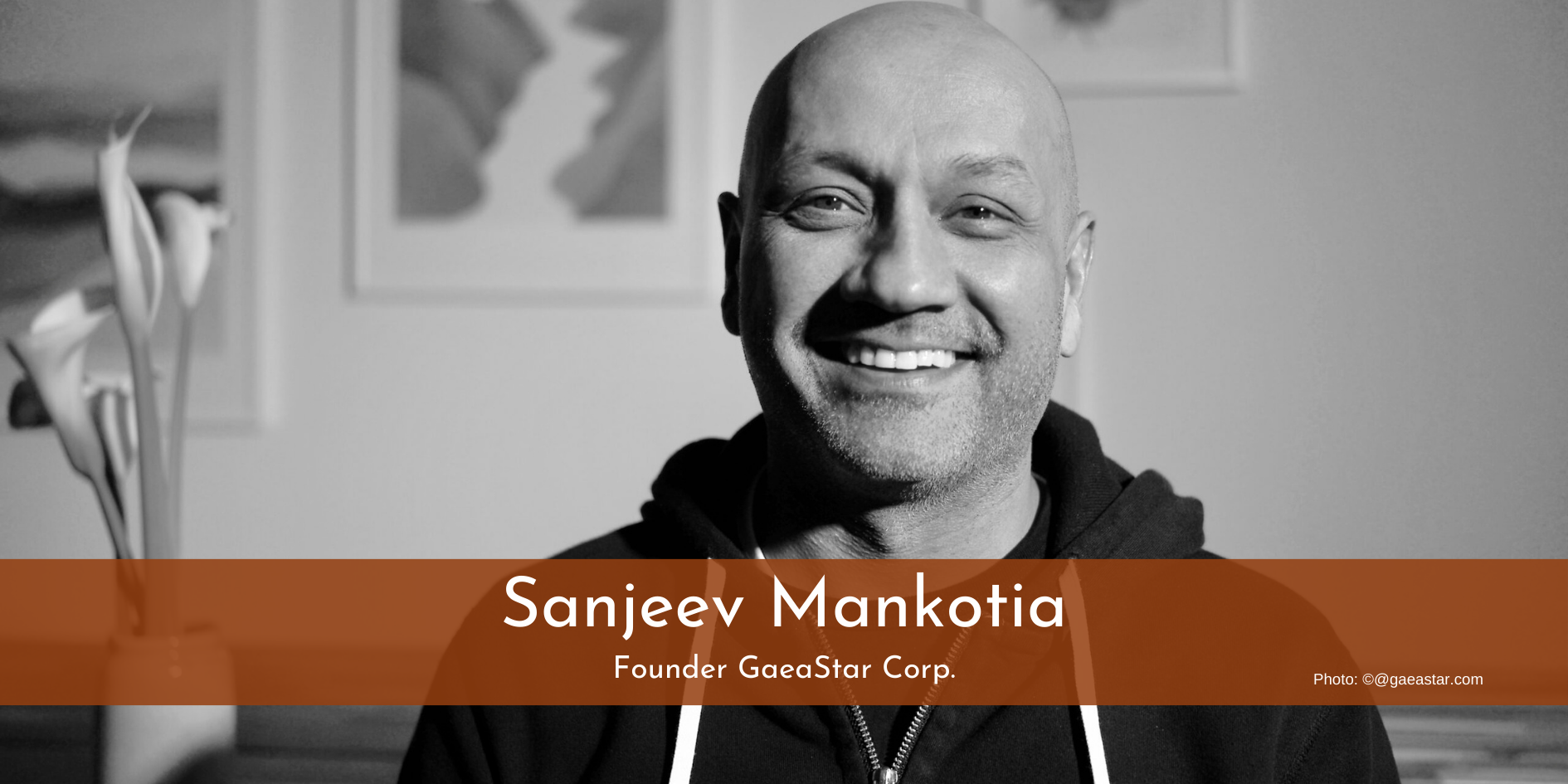
Guest: Sanjeev Mankotia
Role: CEO, Founder, Lead Engineer
Based: San Francisco, CA
Online: gaeastar.com • @gaeastar_
What they order: Tea!
The GaeaStar mission is to eliminate plastic waste. Instead of trying to make a better, more eco-friendly plastic container, Sanjeev wants to replace the plastic component entirely. It is a big challenge, but if we make it easier for the consumer and the retailer to be environmentally friendly, more humans will choose that path. At least, I believe that to be true, and so does the team at GaeaStar.
I often wonder if—as an industry—the coffee community is serious about moving towards a sustainable future or latching onto the marketing benefits of exploiting climate change. Coffee, more than many industries, is directly impacted by changes in weather and climate. It seems as if Sanjeev and GaeaStar are trying to be at the forefront of actual change by offering a new product that considers all the impacts that production creates along the supply chain. It is a bigger-picture thinking that encompasses the entire lifecycle of a GaeaStar printed clay cup.
“We believe that convenience doesn’t have to destroy our planet. That’s why we’ve developed a new product category. GaeaStar’s ultra-thin reusable clay cups are specifically designed to combine to-go consumption with the elevated experience of in-house dining. Reuse your cup again and again, or use it once for ultimate convenience, our clay cups work for all occasions.”
• GaeaStar.com
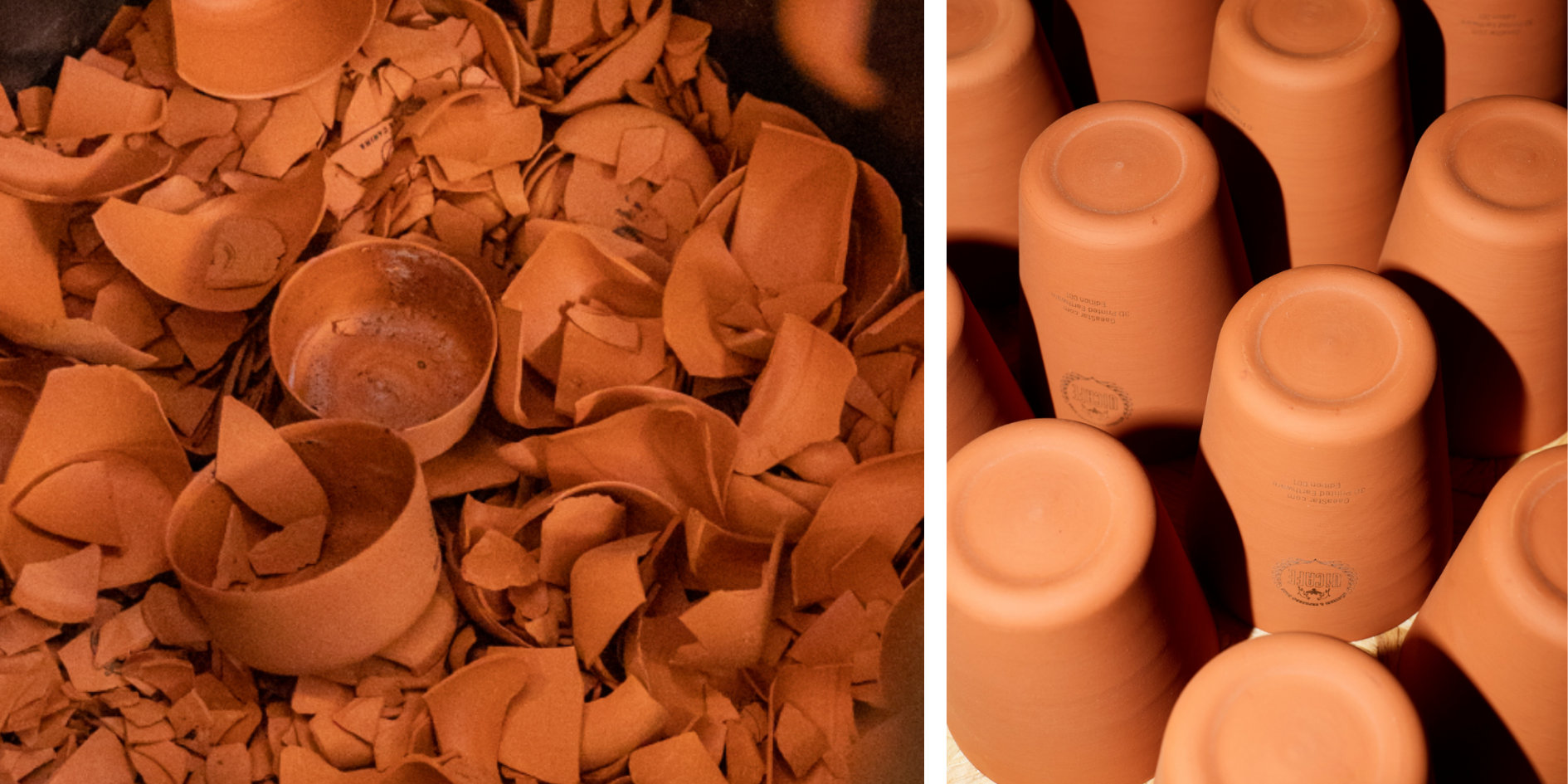
"After months of working together to fine-tune the prototype and train staff, GaeaStar clay vessels are now being offered at select Verve locations in Palo Alto, Santa Cruz, and Los Angeles. Customers at these cafés can opt to have their beverages served in a 12-ounce GaeaStar cup for an additional $2. Verve customers can choose whether to discard the cup or benefit from a discount on future drinks when they bring the cup back, encouraging reuse.
500 billion single-use coffee cups are discarded globally every year, but just 1% are actually recycled – leaving the rest to pile up in our landfills or spill into our waterways. In addition to the environmental harm they cause, consumers are wary of microplastics leaching into their everyday coffee. By sourcing raw materials from the Earth, GaeaStar eliminates the need to recycle and plastic waste…
…“Our partnership with GaeaStar has the potential to transform the future of to-go coffee. We know it’s not always convenient for customers to bring their own cup, so this is the perfect solution, enabling elevated in-cafe experiences with the convenience of to-go, and without the guilt of takeaway packaging,” said Colby Barr, CEO and co-founder of Verve Coffee Roasters.
“Verve has always focused on crafting the future of coffee, and that means protecting its future – including being incredibly mindful of our impact on the environment. We’re excited to offer our customers a new way to enjoy their cup of coffee that brings quality, sustainability, and an elevated experience together.”
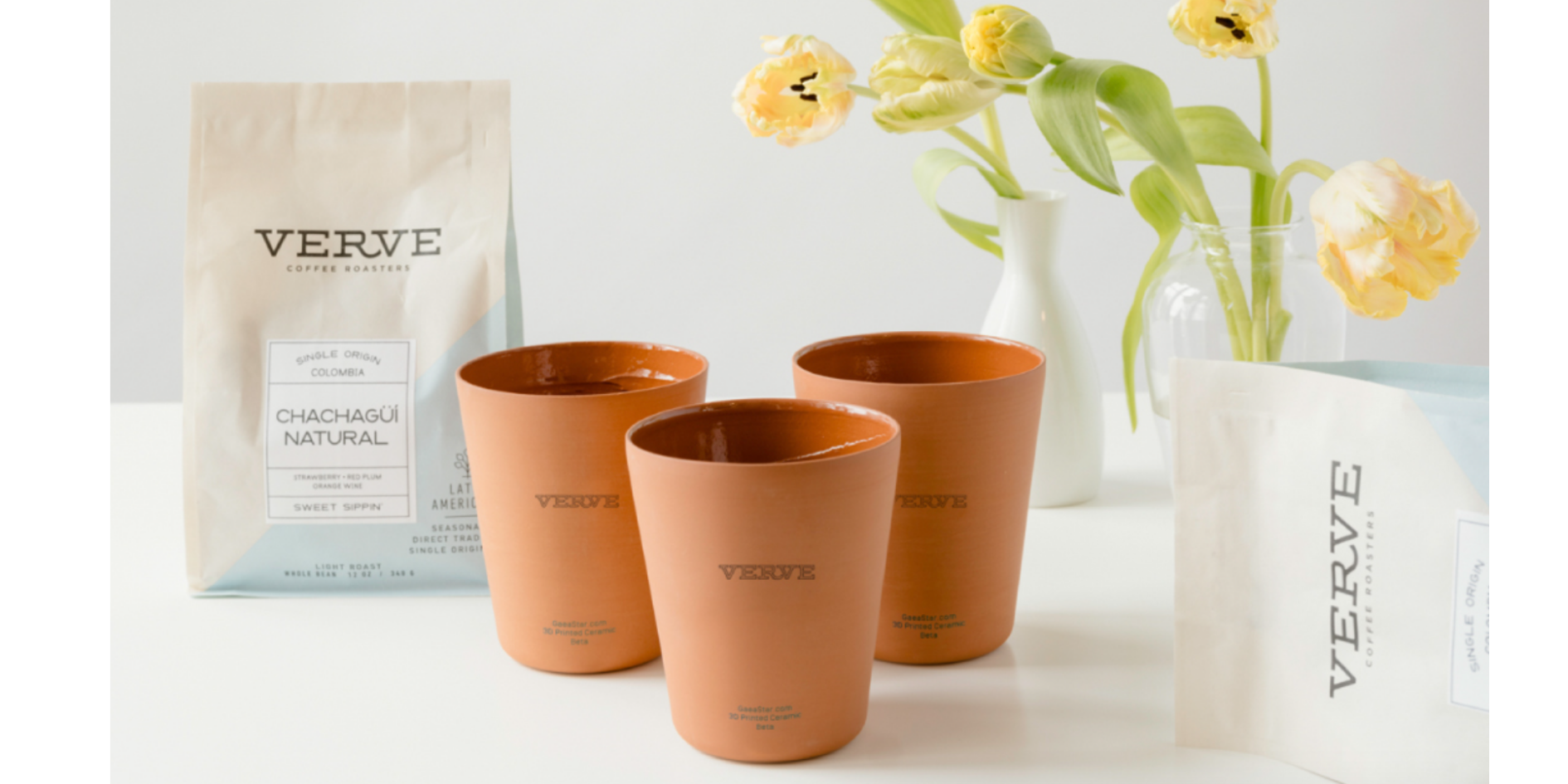
Sanjeev mentioned the Japanese concept of wabi-sabi in reference to how each 3D printed cup has its own uniqueness. I wanted to learn more so I headed to Wikipedia where I found this definition.
In traditional Japanese aesthetics, wabi-sabi (侘び寂び) is a world view centered on the acceptance of transience and imperfection. The aesthetic is sometimes described as one of appreciating beauty that is "imperfect, impermanent, and incomplete" in nature. It is prevalent in many forms of Japanese art.
Wabi-sabi is a composite of two interrelated aesthetic concepts, wabi (侘) and sabi (寂). According to the Stanford Encyclopedia of Philosophy, wabi may be translated as "subdued, austere beauty," while sabi means "rustic patina." Wabi-sabi is derived from the Buddhist teaching of the three marks of existence (三法印, sanbōin), specifically impermanence (無常, mujō), suffering (苦, ku) and emptiness or absence of self-nature (空, kū).
Characteristics of wabi-sabi aesthetics and principles include asymmetry, roughness, simplicity, economy, austerity, modesty, intimacy, and the appreciation of both natural objects and the forces of nature.
Learn about Gaestar on:
A huge, on-going thank you to all of this show’s industry partners.
Roastar • Zumbar Coffee & Tea • Steady State Roasting • Mostra Coffee • Coffee Cycle • Camp Coffee Company • Ignite Coffee Company • Ascend Coffee Roasters • Marea Coffee • Cape Horn Green Coffee • Hacea Coffee Source • Crossings Coffee • Acento Coffee Roasters • Sivitz Roasting Machines • Craft 42 Roasters • Me and My Uncle Coffee Roasters

Do you want to support the show without subscribing? Help keep us caffeinated by buying us a cup of coffee. Thanks for all your support.
Thank you for reading Roast! West Coast. This newsletter is always free to the public thanks to our partners and subscribers.

Check out our World of Coffee free coffee giveaway collaboration with Roastar Coffee Packaging, featuring Coffee Santa
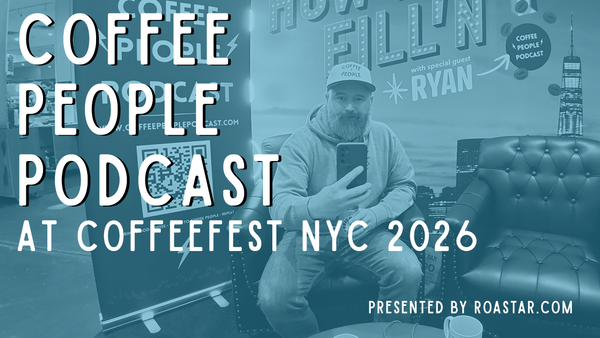
We visit with the guests of CoffeeFest NYC as part of the Roastar coffee packaging booth in March 2026.
Jean Brillman of White Horse Coffee Roasters in Jenkintown, PA was our first podcast guest at the Roastar booth during CoffeeFest NYC.
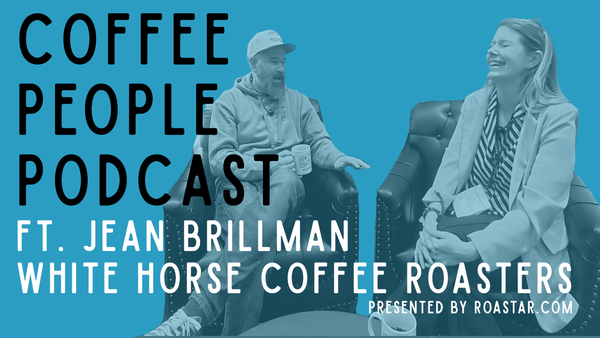
Jean Brillman of White Horse Coffee Roasters in Jenkintown, PA was our first podcast guest at the Roastar booth during CoffeeFest NYC.